

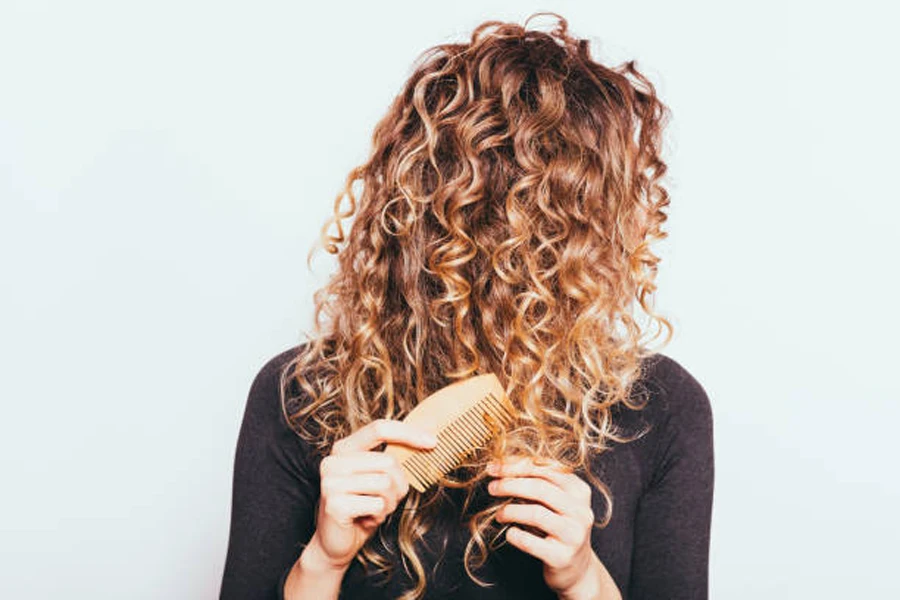
The wolf cut has rapidly evolved from a niche, alternative hairstyle into a global hair trend embraced across textures, lengths, and personal styles. While it first gained popularity among straight and wavy hair wearers, the wolf cut curly on curly hair has emerged as one of the most striking and versatile interpretations of the style. Combining the shag’s layered freedom with the mullet’s rebellious edge, the wolf cut curly offers curly-haired individuals a haircut that celebrates volume, texture, and natural movement rather than suppressing it.
This article explores what defines a curly wolf cut curly, why it works so well on curls, how it differs from other layered styles, and how to maintain it for maximum impact.
What Is a Wolf Cut?
At its core, the wolf cut curly is a heavily layered haircut characterized by:
- Shorter, voluminous layers at the crown
- Longer, tapered lengths toward the back and sides
- A deliberately undone, textured finish
- Often paired with bangs or a fringe
The name “wolf cut” reflects its wild, untamed appearance—structured enough to be intentional, yet messy enough to feel effortless. It draws inspiration from the classic shag haircut of the 1970s and the mullet of the 1980s, but modernized with softer blending and customizable proportions.
Why the Wolf Cut Works Exceptionally Well on Curly Hair
Curly hair naturally possesses volume, movement, and irregularity—qualities that align perfectly with the wolf cut curly design philosophy. Unlike blunt or overly structured haircuts that can weigh curls down or create awkward shapes, the wolf cut amplifies what curly hair already does best.
1. Natural Volume Enhancement
Curly hair tends to build volume at the crown, which is exactly where the wolf cut places its shortest layers. This creates lift without teasing, over-styling, or excessive product use.
2. Improved Curl Definition
Strategic layering prevents curls from clumping too heavily at the ends. Instead, curls spring up individually, resulting in better definition and bounce.
3. Reduced Triangle Shape
Many curly cuts risk forming a “triangle” silhouette—flat at the top and overly wide at the bottom. The wolf cut curly redistributes weight upward, balancing the overall shape.
4. Embraces Imperfection
Curls are unpredictable by nature. The wolf cut curly doesn’t fight that unpredictability; it uses it. Slight asymmetry, uneven curl patterns, and day-to-day variation all enhance the style rather than detract from it.
Key Characteristics of a Curly Wolf Cut
While the wolf cut can be adapted to many hair types, the curly version has some defining features:
- Short-to-medium layers at the crown to create lift
- Longer perimeter length that maintains shape and versatility
- Texturizing rather than thinning, avoiding razors that can cause frizz
- Optional curly bangs or curtain fringe, cut dry or curl-by-curl
- A rounded yet wild silhouette, not boxy or overly sculpted
The goal is controlled chaos: a haircut that looks intentional but never stiff.
Wolf Cut vs. Curly Shag: What’s the Difference?
The wolf cut is often confused with the curly shag, and while they share DNA, there are important distinctions.
| Feature | Curly Shag | Curly Wolf Cut |
|---|---|---|
| Layering | Even, rounded layers | More dramatic contrast between crown and length |
| Shape | Soft, retro | Edgier, more modern |
| Length Retention | More uniform | Longer back and perimeter |
| Vibe | Vintage, relaxed | Bold, rebellious |
If the shag whispers “effortlessly cool,” the wolf cut howls confidence.
Best Curl Types for a Wolf Cut
The wolf cut is adaptable across the curl spectrum, but results vary based on curl pattern and density.
Type 2 (Wavy)
- Produces a soft, feathered wolf cut
- Less dramatic volume, more movement
- Works best with light layering and longer lengths
Type 3 (Curly)
- The most popular and photogenic wolf cut category
- Balanced volume and definition
- Ideal for bangs and crown layering
Type 4 (Coily)
- Requires expert curl-by-curl cutting
- Produces a bold, sculptural silhouette
- Benefits from shrinkage-aware shaping
The key is customization—the wolf cut should be tailored to curl behavior, not imposed uniformly.
Length Variations of the Curly Wolf Cut
Short Curly Wolf Cut
- Cropped sides with a voluminous top
- Often paired with micro-bangs
- High-fashion, editorial aesthetic
Medium-Length Curly Wolf Cut
- Most versatile and wearable
- Allows for updos, half-up styles, and air-drying
- Ideal balance between structure and freedom
Long Curly Wolf Cut
- Retains length while adding dramatic shape
- Layers prevent heaviness and elongation
- Perfect for those wanting change without sacrificing length
Styling a Curly Wolf Cut
One of the greatest strengths of the wolf cut is its low-maintenance styling potential.
Everyday Styling Routine
- Apply a lightweight curl cream or leave-in conditioner to soaking-wet hair
- Scrunch upward to encourage curl formation
- Diffuse on low heat or air-dry for a softer finish
- Finish with a light oil or serum on the ends if needed
For Extra Volume
- Flip hair upside down while diffusing
- Use a root-lifting mousse at the crown
- Avoid heavy gels that collapse layers
For Defined, Editorial Curls
- Use a medium-hold gel
- Finger-coil select sections
- Break the cast gently once dry
The cut is designed to do most of the work—styling should enhance, not overpower it.
Maintenance and Trims
Although the wolf cut looks intentionally grown-in, it still requires periodic shaping to maintain balance.
- Trim every 8–12 weeks for best results
- Bangs may need more frequent touch-ups
- Avoid over-trimming the crown to preserve volume
As it grows out, the wolf cut transitions gracefully into a long shag, making it ideal for those who dislike frequent salon visits.
Who Should Consider a Curly Wolf Cut?
The curly wolf cut is ideal for people who:
- Want volume without teasing or heat styling
- Prefer expressive, personality-driven haircuts
- Are comfortable with a slightly unconventional silhouette
- Want to highlight their natural curl pattern
It may not be ideal for those seeking sleek, uniform, or highly polished hairstyles.
Cultural Influence and Modern Appeal
The wolf cut’s resurgence is closely tied to Gen Z fashion, gender-fluid aesthetics, and social media culture. Its adaptability across genders, textures, and personal identities has made it a symbol of self-expression rather than conformity.
On curly hair, this symbolism is even stronger. For decades, curly textures were encouraged to be “tamed.” The curly wolf cut rejects that narrative entirely, positioning curls as bold, artistic, and unapologetic.
Final Thoughts
The wolf cut for curly hair is more than a haircut—it’s a statement. It celebrates texture, volume, and individuality while offering a surprisingly practical and wearable shape. By working with the natural behavior of curls instead of against them, the wolf cut delivers a style that feels modern, expressive, and authentic.
For anyone ready to embrace their curls with confidence and edge, the curly wolf cut stands as one of the most compelling hairstyle choices today.